A Step-by-Step Guide to Becoming a SACAA-Licensed Drone Pilot

The use of UAS is expanding across industries in South Africa, from surveying and agriculture to infrastructure inspections and emergency services. As more organisations adopt this technology, interest in SACAA drone pilot training continues to grow.
If you’re wondering whether you need a license to fly a drone, this is the guide for you. We will discuss all SACAA licensing requirements for drone operators in South Africa.
Do You Need a License to Fly a UAS in South Africa?
Whether you need a licence depends on how you intend to use your UAS.
If you fly solely for private or recreational purposes, with no commercial outcome, interest or gain, you do not need a Remote Pilot Certificate (RPC), provided you comply with the operating limitations set out by SACAA.
However, if you plan to use a UAS for commercial, corporate or non-profit operations, an RPC and other applicable SACAA approvals are required.
These SACAA drone regulations are governed by Part 101 of the South African Civil Aviation Regulations. Detailed guidance is available on the official SACAA website here.
SACAA Drone Pilot Requirements
To qualify for a Remote Pilot Certificate (RPC), applicants must meet the eligibility criteria set by the South African Civil Aviation Authority and successfully complete the required assessments before submitting their application. Applicants must:
- Be at least 18 years old.
- Hold a valid aviation medical assessment appropriate for remote pilot licensing.
- Complete training through a SACAA-approved Aviation Training Organisation (ATO).
- Pass the required theoretical knowledge examinations.
- Successfully complete the practical skills assessment.
- Pass the Radiotelephony examination.
- Demonstrate English Language Proficiency at ICAO Operational Level 4 or higher.
- Submit the required licence application and supporting documentation to SACAA.
UDS supports this licensing pathway by offering the Remote Pilot Certificate (RPC) through our SACAA-approved Aviation Training Organisation. This programme equips prospective remote pilots with the knowledge and practical skills needed to meet the training and assessment requirements before applying to SACAA for the issue of a Remote Pilot Certificate.
Step-by-Step Guide to Becoming a SACAA-Licensed Remote Pilot
Becoming a certified remote pilot is a structured process that combines theoretical learning with practical flight experience before you can apply for your certification.
Step 1
Enrol with a SACAA-approved Aviation Training Organisation (ATO) and submit the required documentation, including your identity document, medical assessment and other enrolment requirements.
Step 2
Complete the theory component of the Remote Pilot Certificate (RPC), covering subjects such as Air Law, Meteorology, Flight Planning, Human Factors, Aircraft Technical and General, and Radiotelephony.
Step 3
Successfully pass the required theoretical examinations before progressing to practical flight training.
Step 4
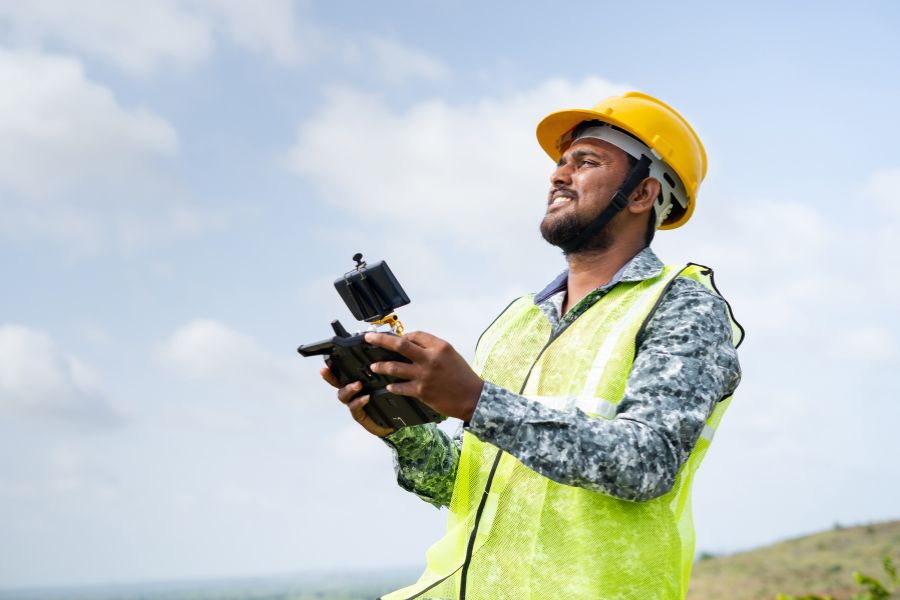
Complete your practical flight training, where you’ll develop the skills needed to safely operate a UAS in real-world scenarios under instructor guidance.
Step 5
Once you’re ready, complete your final practical check-out with a SACAA Designated Unmanned Aircraft Examiner.
Step 6
Submit your application and supporting documentation to SACAA. Once approved, you’ll receive your certification, allowing you to legally conduct commercial UAS operations.
Additional UAS Training
After obtaining an RPC, remote pilots can further develop their skills through specialist training aligned with their operational needs. UDS offers advanced courses including Beyond Visual Line of Sight (BVLOS), Drone Fixed Wing Rating Training, AVSEC UAS Training, and Instructors Course to support more specialised UAS operations and career development.
Why Aviation Organisations Need Continuous Training
The aviation industry continues to evolve as new technologies, operational processes, and security threats emerge. Continuous training helps organisations keep employees informed about changing regulations, updated security procedures, and current industry best practices.
Refresher programmes also help maintain consistency across teams operating within restricted areas, screening checkpoints, cargo facilities, and other sensitive environments.
Ongoing aviation and security training ensures personnel remain confident in their responsibilities and prepared to respond appropriately during security incidents or operational disruptions.
By investing in continuous learning, aviation organisations strengthen long-term operational resilience, improve regulatory compliance, and maintain high aviation safety and security standards across all areas of operation.
Drone Pilot Licence Price and Career Opportunities
When considering the financial implication of obtaining a drone pilot license, it’s important to remember that SACAA licensing fees and aviation medical costs are separate from training fees.
Training costs are set by individual SACAA-approved Aviation Training Organisations (ATOs), so prospective pilots should request quotations directly from their chosen provider.
If you’re wondering, whether drone pilots are in demand in South Africa, licensed remote pilots are increasingly supporting industries including agriculture, surveying, infrastructure inspections, mining, public safety and media, where UAS technology continues to play an expanding operational role.
UDS: A SACAA-Approved Aviation Training Organisation
Choosing the right Aviation Training Organisation is an important part of your journey towards becoming a licensed remote pilot. As a SACAA-approved Aviation Training Organisation (ATO), UDS is committed to delivering high-quality instruction that aligns with South African aviation standards.
Experienced instructors, comprehensive course content and practical flight training help prepare candidates for the licensing process with confidence.
Whether you are starting your career or looking to expand your operational capabilities, UDS offers the Remote Pilot Certificate (RPC) as well as advanced programmes, including Beyond Visual Line of Sight (BVLOS) and other specialist UAS training courses.
GET IN TOUCH
CONTACT US