UAS Drone Technology: Types of Drones and Their Uses

From securing high-risk facilities to analysing crop health and mapping vast mining operations, the modern UAS drone has become an indispensable operational tool. What was once viewed as niche technology is now a strategic asset across multiple industries.
Understanding the different types of drones and what drones are used for is essential for organisations looking to improve safety, gather accurate data and operate more efficiently. The capabilities of a drone are shaped not only by its design, but by the technology it carries and the expertise behind its deployment.
In this article, we explore the various types of drones, the technologies used by drones, and the practical applications that are transforming sectors such as security, agriculture, infrastructure and beyond.
What are Drones used for?
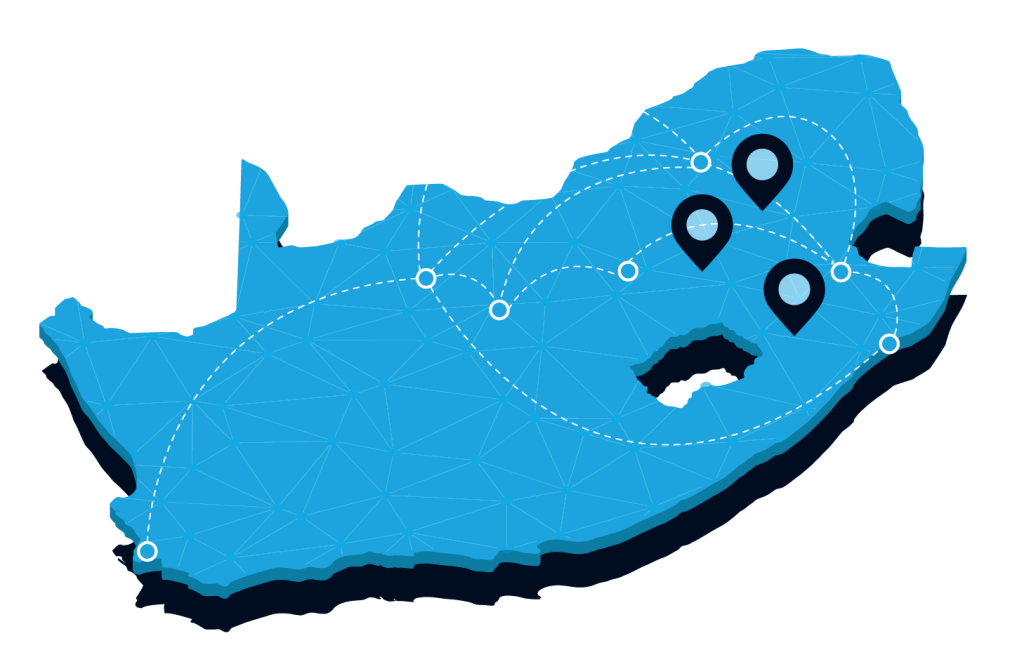
A modern UAS drone is no longer limited to aerial photography or recreational flying. Today, organisations across South Africa rely on drone technology to improve safety, enhance visibility, reduce operational risk and collect accurate data in environments that are often hazardous or difficult to access.
Understanding what drones are used for begins with recognising the wide range of industries that now depend on them for mission-critical operations.
- Security and Surveillance: Drones provide real-time aerial intelligence, enabling rapid threat detection, perimeter monitoring and coordinated response with ground teams.
- Mining and Industrial Monitoring: Used for stockpile volumetrics, high-wall inspections and site surveillance, drones improve safety while delivering precise operational data.
- Infrastructure Inspections: Bridges, cooling towers and large structures can be inspected efficiently without exposing personnel to height-related risks.
- Renewable Energy Inspections: Solar PV and wind turbine inspections are conducted faster and with greater accuracy using specialised sensors.
- Environmental Surveying: Flood-line mapping, vegetation monitoring and topographical analysis support sustainable planning.
- Agriculture: Agri drones assist with crop monitoring, spraying and precision farming.
- Emergency Response: Rapid aerial assessment improves situational awareness during incidents.
- Commercial Photography and Mapping: High-resolution imaging supports development, planning and documentation projects.
Types of Drones and Their Core Functions
Understanding the different types of drones is essential when determining which platform is best suited to a specific operation. The design of a UAS drone directly influences its endurance, manoeuvrability, range and payload capacity. In commercial environments, selecting the correct aircraft is not simply a matter of preference, it is a strategic decision based on terrain, objectives and data requirements.
Multi-Rotor Drones
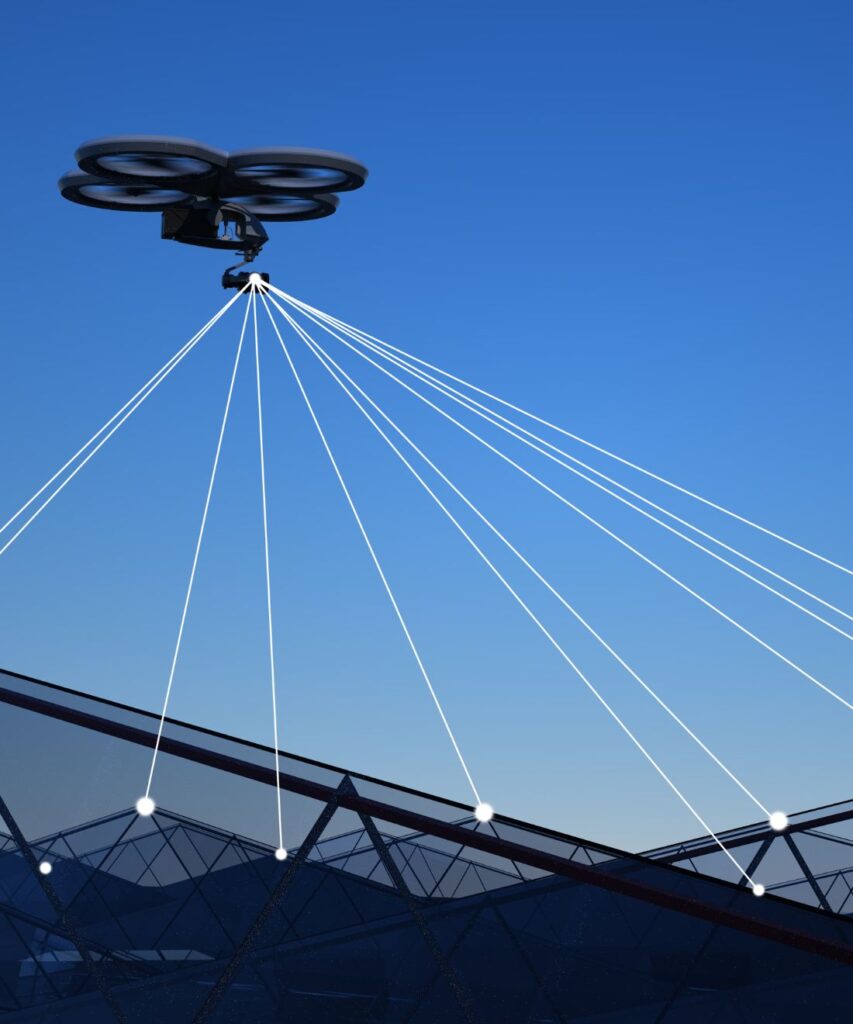
Multi-rotor drones are known for their stability and high manoeuvrability. They can hover precisely in one position, making them well suited to close-range inspections and detailed structural assessments. In security surveillance operations, their ability to maintain a fixed aerial viewpoint provides critical real-time intelligence and enhanced situational awareness.
Fixed-Wing Drones
Fixed-wing drones operate similarly to traditional aircraft, using forward motion to generate lift. Their aerodynamic design allows for long-range operations and extended flight times, making them ideal for covering vast areas efficiently. These drones are commonly used for large-scale surveys, including mining volumetrics, topographical mapping and infrastructure corridor inspections. Their ability to remain airborne for extended periods makes them particularly valuable in remote or expansive environments.
Hybrid / VTOL Drones
Hybrid or VTOL (Vertical Take-Off and Landing) drones combine the endurance of fixed-wing aircraft with the hovering capability of multi-rotor systems. This versatility makes them ideal for complex terrain, large facilities and operations that require both range and precision.
Specialised Drone Technologies and Payloads
The true capability of a UAS drone lies not only in the aircraft itself, but in the advanced payloads and technologies it carries. These systems determine how data is captured, interpreted and applied in real-world operations.
Thermal Drone Technology
A thermal drone is equipped with sensors that detect heat signatures rather than visible light. A drone with thermal camera technology can identify temperature variations invisible to the naked eye, making it highly effective for perimeter security, suspect tracking and search and rescue missions.
In industrial environments, thermal drones assist with detecting overheating equipment, structural weaknesses and electrical faults. Because thermal imaging does not rely on daylight, it is particularly valuable for night operations, enabling reliable detection in complete darkness.
Night Vision Drone Capabilities
While thermal imaging detects heat, a night vision drone enhances available light to produce clearer imagery in low-light conditions.
This technology is useful where visual detail is required after sunset but heat detection alone is insufficient. In crime prevention and security deployments, night vision systems provide improved visibility without alerting intruders.
Surveying and Mapping Technologies
Professional surveying relies on advanced technologies used by drones, including LiDAR for precise elevation modelling, photogrammetry for high-resolution 3D mapping, and multi-spectral imaging for vegetation and environmental analysis. These tools enable accurate, data-driven decision-making across industries.
Agricultural Drones and Precision Farming
Uses for Agricultural Drones:
- Crop Monitoring: Agricultural drones capture high-resolution imagery that enables farmers to assess crop health, detect disease early and identify stress caused by pests or nutrient deficiencies.
- Irrigation Analysis: Using multi-spectral sensors, agri drones can identify areas affected by over- or under-watering, allowing for targeted irrigation adjustments and improved water management.
- Yield Forecasting: By analysing plant density, growth patterns and seasonal data, agricultural drones assist farmers in predicting yields more accurately and planning harvest logistics effectively.
Drone Sprayer Technology
A drone sprayer is a specialised UAS designed to distribute fertilisers, pesticides or herbicides with precision. Unlike traditional blanket spraying methods, a drone sprayer applies chemicals only where required, reducing waste and limiting environmental impact. This targeted approach improves efficiency, lowers operational costs and minimises chemical exposure to surrounding ecosystems.
By integrating real-time mapping data with automated flight paths, agricultural drones ensure consistent and controlled application, supporting both productivity and sustainable farming practices.
Mini Drone vs Commercial-Grade UAS Drone
A mini drone is typically designed for recreational use, basic aerial photography or entry-level training. Compact and user-friendly, these consumer-grade devices are suitable for hobbyists and light commercial content creation. However, their limited flight time, restricted payload capacity and reduced stability in challenging weather conditions make them unsuitable for complex or high-risk operations.
Commercial environments require specialised UAS drone systems built for endurance, advanced sensor integration and operational reliability. In sectors such as security, mining and infrastructure inspection, aircraft must carry sophisticated payloads and operate consistently under demanding conditions. Furthermore, commercial drone operations in South Africa are regulated by the South African Civil Aviation Authority (SACAA). Compliance, certified pilots and approved operational procedures are essential when conducting professional aerial work.
Choosing the Right Drone for the Right Application
Selecting the correct UAS drone is a strategic decision that directly impacts safety, efficiency and data quality. The choice should always be guided by the operational objective rather than convenience or cost alone.
Key considerations include the following.
- Environment: Terrain, weather conditions and surrounding infrastructure influence the type of aircraft required, from long-range fixed-wing platforms to highly manoeuvrable multi-rotor systems.
- Required Range: Large mining sites or infrastructure corridors may require extended flight endurance, while confined facilities may prioritise precision hovering.
- Data Accuracy Needs: Survey-grade mapping, thermal detection or multi-spectral analysis each require specific payload technologies.
- Safety Considerations: Operations in hazardous or high-risk areas demand reliable systems and experienced operators.
- Compliance Requirements: Commercial drone use must align with South African aviation regulations to ensure lawful and responsible deployment.
The Importance of Compliance and Professional Operation in South Africa
Drone operations in South Africa take place within regulated airspace governed by the South African Civil Aviation Authority (SACAA). This regulatory framework exists to ensure that unmanned aircraft operate safely alongside manned aviation, critical infrastructure and the public. Understanding airspace classifications, flight permissions and operational limitations is essential for preventing incidents and avoiding legal consequences.
Certified pilots play a crucial role in maintaining these standards. Proper training ensures not only technical flying competence, but also knowledge of aviation law, risk assessment and emergency procedures. Unlicensed or non-compliant operations can result in significant penalties, reputational damage and serious safety risks, particularly in high-security or industrial environments.
Professional drone deployment prioritises structured operational procedures, continuous oversight and accountability. In complex sectors such as mining, infrastructure and security surveillance, compliance is not simply administrative, it is fundamental to safe, responsible and effective aerial operations.
Why Professional Drone Solutions Matter
UAS drone technology has evolved into a highly specialised field, supporting industries that demand accuracy, reliability and real-time intelligence. From thermal security surveillance to precision agriculture and large-scale surveying, drones now play a critical operational role across South Africa. However, successful deployment depends on far more than the aircraft itself. It requires:
- Qualified crew with the training and operational experience to manage complex environments.
- Fit-for-purpose aircraft selected according to terrain, range and payload requirements.
- Operational oversight to ensure missions are monitored, managed and executed safely.
- Full compliance with aviation regulations and industry standards.
As South Africa’s first and largest commercial drone operator, we at UDS have built our reputation on meeting these exact standards. As an UASOC holder and SACAA-approved training organisation with extensive monthly flight hours and national operational capacity, we bring proven experience across security, mining, infrastructure and agriculture.
If your organisation is exploring drone security, surveying, inspections, or professional pilot training, contact UDS to discuss a tailored, compliant solution designed for your operational needs.
GET IN TOUCH
CONTACT US